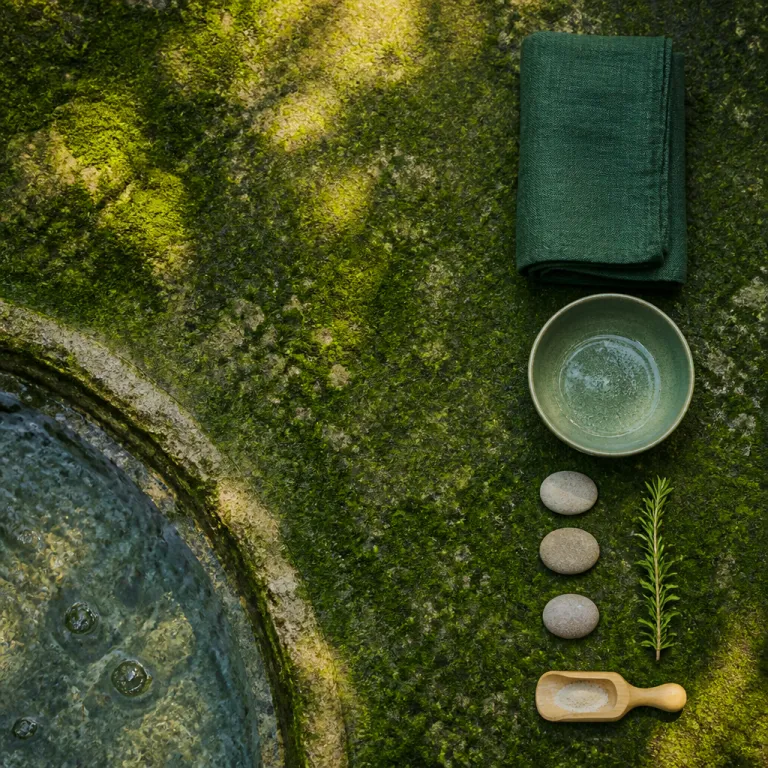
Fontsanta thermal spa Mallorca hot springs: why this water is unique
Fontsanta sits quietly in the countryside of Campos, yet the thermal waters beneath the property make it one of the most singular wellness addresses in the Balearic Islands. These Fontsanta thermal spa Mallorca hot springs form the only officially recognized natural thermal spring in the archipelago, a geological anomaly that has shaped the hotel and its spa wellness philosophy. For couples who care as much about mineral composition as about a king size bed and a serene pool, this is where the story of their stay should begin.
The geology here is precise rather than mystical, and it explains why this hotel thermal experience exists in Campos but not in Sant Jordi or Colònia Sant Jordi. Rainwater filters slowly through porous limestone, dissolving minerals before reemerging as natural thermal waters that rise at a stable temperature and with a mineral concentration measured at 25.34 g per liter. That figure appears in the hotel’s own hydrogeological report, which is summarized in the technical section of the official Fontsanta website, and is consistent with the classification of “strongly mineralized” waters used in Spanish balneology guidelines published by the Instituto de Salud Carlos III. Together, these sources help explain why the springs feel so different from standard spa pools in Mallorca.
According to the property’s analysis, the thermal waters are predominantly chlorine and sodium, with magnesium, calcium, sulfur, fluorine, and potassium. This specific balance is what gives the Fontsanta spring its slightly silky texture on the skin, and it is also what supports claims of circulatory and muscular benefits. When you step into a thermal pool here, you are not just entering warm waters Balearic style; you are immersing yourself in a natural resource that has been formally recognized since the nineteenth century and referenced in regional health and tourism documents ever since.
The history of these natural thermal waters is unusually well documented for a Mediterranean spa. Bathing facilities were established on the site long before the current Fontsanta Hotel opened, and the thermal spring was declared of public interest in a royal decree issued in 1869, a date that appears both in the hotel’s archives and in digitized records of Spanish royal decrees held by the national historical archive. That continuity matters, because it means the hotel is not inventing a wellness story around a generic spa but rather stewarding a natural park style resource that has been valued for generations.
Today, Fontsanta Hotel operates as an adults only retreat with a clear focus on spa wellness rather than nightlife. The property’s low slung architecture blends into the flat landscape of Salobrar de Campos, the protected natural park that surrounds the estate and stretches towards Es Trenc beach. From many rooms and from at least one suite terrace, you look out over salt pans and bird filled wetlands rather than overbuilt coastline, which reinforces the sense that the thermal complex belongs to a wider ecological system.
For travelers comparing spa options across Mallorca, this context is crucial. Elegant hotels with wellness centers exist in Palma, in Sant Jordi, and along the coast near Colònia Sant Jordi, but none of them sit on a natural thermal spring with this mineral profile. If you are planning a trip and weighing where to book, the question is simple: do you want a good spa, or do you want the only hotel thermal experience in the Balearic Islands that channels its own underground waters directly into the baths and pools you will use every day.
Inside the thermal spa: from hydrotherapy circuit to quiet relaxation
Step into the spa at Fontsanta Hotel and the first thing you notice is the temperature and texture of the thermal waters, not the décor. The hydrotherapy circuit is built around several thermal pools that draw directly from the Fontsanta spring, each calibrated to a slightly different heat level and water pressure. Moving between them becomes a ritual that feels more like a medical protocol than a generic hotel spa routine, yet the atmosphere remains calm and indulgent.
The core of the experience is the sequence of immersion, rest, and re immersion that defines serious spa wellness programs. You might start in a warm indoor pool where jets target the back and legs, then shift to an outdoor pool that opens towards the natural park of Salobrar Campos, before finishing with a cooler plunge that stimulates circulation. Because the mineral rich waters are naturally high in sodium chloride and other dissolved salts, you float more easily, and muscles relax faster than in a standard chlorinated hotel pool.
Beyond the pools, the spa offers mud wraps, Vichy style showers, and focused hydrotherapy treatments that use the same natural thermal waters in different forms. Therapists trained in hydrotherapy guide you through options that range from anti stress rituals to programs aimed at easing joint discomfort, always anchored in the specific properties of the Fontsanta spring. Independent travel reviewers often highlight how staff explain the order of pools and recommended timings, which helps first time visitors treat the circuit as more than just a series of warm baths.
Design wise, the spa leans towards understated luxury rather than glossy spectacle. Smart lighting is used to keep treatment rooms dim but not gloomy, with warm tones that echo the surrounding Campos countryside and the pale salt flats of the nearby natural park. Couples will appreciate that several cabins can be configured for two, allowing you to share a thermal spa ritual or a mud treatment before retreating to your suite terrace or private room for a quieter finish.
Morning yoga sessions are held in the gardens or on a sheltered terrace when the weather allows, and they are timed so that you can move directly from gentle stretching into the thermal pools. That sequence, from movement to immersion, is where the Fontsanta concept feels most coherent, especially if you are used to urban spas in Palma or other parts of Mallorca where the pool is an afterthought. Here, the water is the protagonist, and the rest of the spa wellness offer is built around it.
If you are mapping out a wider wellness itinerary across the island, it is worth pairing this stay with other properties that prioritize fitness and recovery. For example, several elegant hotels in Majorca with on site fitness and wellness centers are profiled in this guide to revitalising wellness focused stays in Mallorca, which can complement a few nights at Fontsanta. Think of Fontsanta as the thermal anchor of your trip, the place where you let the waters Balearic style do the deeper work while other hotels provide more conventional gym and treatment facilities.
Rooms, suites, and terraces: how the hotel frames the springs
The accommodation at Fontsanta Hotel is deliberately low key, designed to frame the thermal experience rather than compete with it. Rooms are spread across several buildings that echo traditional Mallorcan architecture, with pale stone, wooden shutters, and a layout that keeps the property feeling intimate even when occupancy is high. For couples, the choice usually comes down to whether you want a ground floor room that opens directly onto a terrace and garden, or a higher category suite with a larger suite terrace and more privacy.
Standard rooms are generous by island standards, with king size beds, neutral textiles, and bathrooms that prioritize large walk in showers over bathtubs, which makes sense when the thermal spa is a few steps away. Many rooms have a private terrace that looks towards the Salobrar Campos natural park or the landscaped gardens, and some ground floor options open almost directly onto a quiet pool area. Smart lighting is used subtly in these rooms, with dimmable fixtures that let you shift from bright morning light to a softer glow after an evening session in the mineral rich waters.
Suites add more space and a clearer separation between sleeping and living areas, which matters if you are staying several nights and plan to use the hotel as a base for exploring Campos, Es Trenc beach, and the coastline near Colònia Sant Jordi. A suite terrace often includes loungers and sometimes a small private pool or plunge tub, creating a semi private spa wellness zone where you can rest between visits to the main thermal pools. For many guests, that combination of in room comfort and direct access to the Fontsanta thermal spa Mallorca hot springs is what justifies choosing this hotel over a seafront property.
Service is attentive but discreet, in line with the adults only positioning of the hotel. Staff are used to guests structuring their day around the thermal spa schedule, so breakfast times, housekeeping, and even turn down service can often be adjusted to avoid interrupting a long soak or a late afternoon treatment. As one repeat visitor put it in a published review, “the team seem to disappear when you want privacy and reappear the moment you need anything,” a balance that makes the property feel more like a private finca than a conventional resort in Mallorca.
Dining leans towards light Mediterranean dishes that sit comfortably alongside a wellness focused stay. Expect local fish, seasonal vegetables from Campos and nearby villages, and thoughtful vegetarian options, with menus that avoid heavy sauces in favor of olive oil and herbs. While the hotel is not strictly a health retreat, the kitchen understands that guests who come for the Fontsanta thermal waters usually prefer food that supports, rather than undermines, the benefits of repeated immersion in the thermal spring.
If you are combining islands on a longer Balearic itinerary, it can be interesting to contrast this understated rural luxury with the more extrovert spa scene on Ibiza. Several properties there are profiled in this overview of luxury spa hotels in Ibiza with strong wellness credentials, which tend to emphasize sea views and rooftop pools over natural thermal waters. Fontsanta, by contrast, keeps the focus firmly on what lies beneath the soil of Campos rather than on the horizon line of the Mediterranean.
From Es Trenc to Colònia de Sant Jordi: pairing the springs with the sea
One of the quiet luxuries of staying at Fontsanta Hotel is how easily you can move between the thermal waters and some of the best beaches in southern Mallorca. The property sits a short drive from Es Trenc beach, a long, pale sand stretch that has become shorthand for unspoiled coastline in the Balearic Islands. When you spend the morning floating in the Fontsanta thermal spa Mallorca hot springs and the afternoon swimming in the clear waters off Trenc beach, you start to understand why this corner of Campos has become a discreet wellness hub.
Es Trenc itself is backed by dunes and protected land, and much of the surrounding area forms part of the same natural park system that includes Salobrar de Campos. That means you can leave the hotel, drive past salt flats where flamingos feed, and reach the beach without ever passing through a built up resort strip. For couples, the rhythm of a day might be a slow breakfast on the terrace, a mid morning session in the thermal spa, lunch in Colònia de Sant Jordi, and then a late swim before returning to the hotel thermal pools as the sun drops.
Colònia de Sant Jordi, often shortened locally to Colònia Sant Jordi, functions as the small seaside counterpart to Campos inland. From here, boats head out to the island of Cabrera, and the promenade offers low key restaurants and bars that feel a world away from the nightlife of Palma or Ibiza Town. Using Fontsanta as your base, you can explore both Campos and Colònia Sant Jordi in the same day, then return to the mineral rich waters to ease out any tension from walking, swimming, or simply sitting too long at a beachfront café.
For travelers who like to structure trips around experiences rather than around a single hotel, this combination of thermal spring and beach access is powerful. You can spend one day focused on spa wellness, moving between different thermal pools and treatments, and the next day focused on the sea, walking along Trenc beach or exploring smaller coves near Campos Colònia. The key is that the Fontsanta thermal spa Mallorca hot springs remain your constant, the place you return to each evening to reset.
It is also worth paying attention to the light in this part of Mallorca, especially if you are sensitive to atmosphere. Early mornings often bring a soft haze over the Salobrar Campos salt pans, and sunsets can be spectacular when viewed from the hotel terrace or from a quiet stretch of beach. That interplay of light, water, and landscape is what elevates this from a simple spa break to a more layered wellness journey in the Balearic Islands.
If your travel dates coincide with local events, you can add another dimension to the trip by dipping into the region’s cultural calendar. Southern Mallorca and the wider archipelago host a series of summer festivals where local tradition meets visitor friendly programming, and planning around them is made easier by this guide to summer festivals in the Balearics. Returning to the calm of Fontsanta after an evening concert or village fiesta, then slipping into the thermal waters before bed, is one of the most satisfying contrasts you can build into a Balearic itinerary.
How Fontsanta compares to European thermal destinations
Seasoned spa travelers often ask how the Fontsanta thermal spa Mallorca hot springs stack up against classic European thermal destinations such as Budapest or Tuscany. The honest answer is that Fontsanta operates on a smaller, more intimate scale, but with a geological asset that is every bit as serious as the famous baths of Hungary or the spa towns of central Italy. Where Budapest offers grand, historic bathhouses and Tuscany offers hillside resorts with multiple hotel thermal complexes, Fontsanta offers a single, focused property built around one natural thermal spring in the Balearic Islands.
In Budapest, thermal waters are often hotter and more sulfurous, and the experience can be as much about architecture and social ritual as about wellness. At Fontsanta, the mineral profile is dominated by sodium chloride with supporting minerals, and the temperature is calibrated for longer, more relaxing soaks rather than quick, bracing plunges. That makes the Fontsanta thermal waters particularly well suited to couples who want to spend extended time in the pools without fatigue, alternating between indoor and outdoor areas and then retreating to a quiet room or suite terrace.
Tuscany, by contrast, is dotted with spa towns where multiple hotels share access to the same thermal waters, sometimes resulting in a more commercialized feel. Fontsanta avoids that dynamic because the hotel controls direct access to its own thermal spring, and day visitors must reserve in advance. The result is a spa wellness environment that feels curated and calm, with a guest profile that skews towards couples and solo travelers rather than large groups, and with service that can be tailored to your specific thermal spa routine.
Another difference lies in how the thermal experience integrates with the wider landscape. In many mainland destinations, spa towns are surrounded by hills or forests, whereas Fontsanta is framed by the flat, luminous expanse of Salobrar Campos and the nearby coastline of Es Trenc. That means your off spa hours are likely to be spent walking through a natural park, watching birds over the salt pans, or swimming at Trenc beach, rather than visiting historic town centers or vineyards, although those can be added elsewhere in Mallorca.
From a practical perspective, reaching Fontsanta is often easier for travelers already planning a Balearic Islands itinerary. You fly into Palma de Mallorca, pick up a rental car, and drive roughly forty minutes to Campos, passing through agricultural land rather than congested suburbs. For couples who value time and simplicity, that direct route to a serious hotel thermal experience can be more appealing than the multi leg journeys often required to reach smaller spa towns in central Europe.
Ultimately, the decision between Fontsanta and a mainland thermal destination comes down to what you want the rest of your trip to look like. If you want grand architecture and urban culture wrapped around your baths, Budapest is hard to beat, while Tuscany excels at combining vineyards with spa days. If you want a calm, adults only hotel where the only natural thermal spring in the Balearic Islands feeds the pools you will use every day, and where Es Trenc beach is a short drive away, then Fontsanta occupies a category of its own.
Planning your stay: practical details and booking advice
When you plan a stay at Fontsanta Hotel, it helps to think of the thermal waters as the fixed point around which everything else will orbit. The property is open year round, and the Fontsanta thermal spa Mallorca hot springs maintain a stable temperature regardless of the season, which means you can visit in cooler months and still spend long sessions in the pools. For many couples, shoulder season offers the best balance of quiet beaches, comfortable air temperatures, and full access to the spa wellness program.
Reaching the hotel is straightforward if you are comfortable driving. From Palma de Mallorca Airport, you follow the main road towards Campos, then continue towards the coast and the area historically known as Banys de Sant Joan, where the thermal spring emerges. The hotel sits slightly inland from Es Trenc beach and Colònia de Sant Jordi, close enough that you can reach the sea quickly but far enough that the only sounds at night are wind, birds, and the soft movement of water in the pools.
Booking wise, it is worth reserving both your room and your spa treatments well in advance, especially if you are targeting weekends or peak holiday periods. The spa is open to non resident guests by prior reservation, which means that even when the hotel is not full, treatment slots and access to certain thermal pools can book out. If the thermal experience is the main reason for your trip, make sure your reservation confirms not only your room category but also any specific spa wellness programs you want to follow.
When choosing between rooms and suites, consider how much time you plan to spend on your own terrace or in a private pool versus in the main spa area. A standard room with a pleasant terrace may be sufficient if you expect to be in the Fontsanta thermal waters for several hours each day, while a larger suite with a generous suite terrace becomes more valuable if you want a private space for yoga, reading, or simply resting between treatments. Either way, the king size beds and calm décor ensure that your room functions as a quiet extension of the spa rather than as a separate, more hectic environment.
Packing for a stay built around a thermal spring is also slightly different from packing for a standard beach holiday in Mallorca. Bring multiple swimsuits so you can rotate between spa sessions, lightweight clothing for moving between your room and the pools, and footwear suitable for both wet spa areas and dry walks through the Salobrar Campos natural park. If you plan to split your time between the Fontsanta thermal spa Mallorca hot springs and Es Trenc beach, a simple beach bag and quick drying towels will make transitions smoother.
Finally, remember that wellness is not only about treatments and waters but also about how you structure your days. Allow space in your schedule for unplanned time on the terrace, slow walks around the property, and quiet evenings where the only agenda is moving between your room and the thermal spa. Fontsanta rewards guests who lean into its rhythm, letting the thermal waters, the surrounding landscape of Campos and Colònia Sant Jordi, and the understated service of the hotel work together to reset both body and mind.
Key figures and facts about Fontsanta thermal waters
- The mineral concentration of the Fontsanta thermal waters is measured at 25.34 g per liter, a level that places it among the more mineral rich spa waters in Spain, according to data published by Fontsanta Hotel and in line with Spanish balneological classifications of highly mineralized springs issued by national health research bodies.
- The thermal bathing tradition on this site dates back to the nineteenth century, and the spring was formally declared of public interest in 1869, anchoring the hotel’s current spa wellness offer in more than a century of documented use in regional health and tourism records and in official royal decrees.
- The Fontsanta thermal spa operates year round, allowing guests to benefit from stable water temperatures and consistent hydrotherapy programs in all seasons, unlike some coastal resorts in Mallorca that close outside the main summer period.
- Fontsanta is widely cited in local tourism literature as the only hotel in the Balearic Islands built directly on a natural thermal spring, which means every thermal pool and hydrotherapy treatment uses water that emerges from beneath the property rather than heated mains water.
- The spa combines thermal pools, hydrotherapy treatments, and mud based rituals, using tools such as Vichy showers and dedicated spa facilities, in partnership with local wellness experts and regional tourism agencies.
Frequently asked questions about Fontsanta thermal spa
What minerals are in the thermal waters at Fontsanta ?
The thermal waters at Fontsanta contain a high concentration of dissolved minerals, dominated by sodium chloride. According to the property’s own analysis, the waters are predominantly chlorine and sodium, with magnesium, calcium, sulfur, fluorine, and potassium. This composition supports the spa’s focus on circulatory, muscular, and relaxation benefits.
When were the Fontsanta thermal waters declared of public interest ?
The thermal spring at Fontsanta was formally declared of public interest in 1869, long before the current hotel was built. That recognition helped protect the site and establish its reputation as a place for therapeutic bathing in southern Mallorca. The modern Fontsanta Hotel and spa now build on that legacy with contemporary wellness programs.
Is the Fontsanta spa open to guests who are not staying at the hotel ?
Yes, the spa at Fontsanta is open to non resident guests, but only with prior reservation. Day visitors can book access to the thermal pools and specific hydrotherapy treatments, subject to availability and capacity limits. If you are not staying at the hotel, it is essential to reserve well in advance, especially during busy periods.
What kind of treatments does the Fontsanta thermal spa offer ?
The spa offers a range of hydrotherapy treatments and thermal water baths built around the Fontsanta thermal spa Mallorca hot springs. Guests can follow circuits through different thermal pools, book mud wraps and Vichy style showers, and add massages or targeted rituals designed to complement the effects of the mineral rich waters. Programs can be tailored to focus on stress relief, joint comfort, or general wellness.
How should I prepare for a visit to the Fontsanta thermal spa ?
To make the most of a visit, you should book in advance, bring appropriate swimwear, and check any seasonal offers or packages that combine accommodation with spa access. Plan to arrive early enough to move through the thermal pools without rushing, and allow time afterwards to rest on the terrace or in your room. If you have specific health concerns, discuss them with spa staff before starting any intensive hydrotherapy program.